
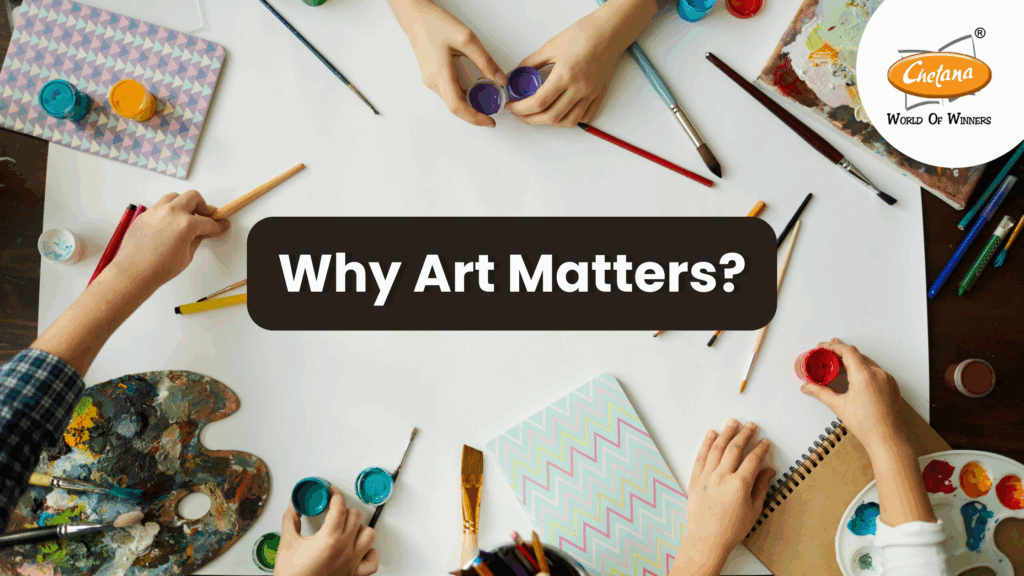
Art is often viewed as a hobby or an extracurricular activity, but in early education, it plays a much more profound role. Integrating art into the classroom goes beyond fostering creativity it nurtures cognitive, emotional, and social development. When creativity is woven into subjects like math, science, and language, it offers a well-rounded, child-centered learning experience that promotes both skill development and personal growth.
Art as Life Skills: Beyond Creativity
Art teaches essential life skills such as problem-solving, communication, collaboration, and adaptability. Engaging with art allows children to think critically and express emotions in ways that may be difficult through words alone. For instance, when children paint their emotions, they develop emotional intelligence, learning to process and communicate complex feelings. These skills aid in social interactions, decision-making, and self-confidence.
It also promotes fine motor skills and hand-eye coordination. Simple tasks like cutting shapes or drawing lines help develop the motor skills necessary for daily activities, such as writing or using tools. These skills translate beyond the art room and into everyday scenarios.
Engaging Both Sides of the Brain
Art integration engages both the left and right sides of the brain. Structured activities like drawing geometric shapes stimulate the left brain, responsible for logical thinking and analytical reasoning. In a math class, using art to explore symmetry, fractions, or proportions can help students understand abstract concepts visually.
Meanwhile, creative activities like painting and storytelling activate the right brain, encouraging innovation and imagination. When students blend analytical and creative thinking, they develop cognitive flexibility, which helps them approach problems with both logic and creativity. For example, designing a mural that represents a scientific concept involves planning and creativity, nurturing critical thinking and problem-solving skills.
Connecting Art to Multiple Subjects
Art integration is not limited to visual arts; it can be connected to many subjects. In math, students can use geometric shapes to create artwork, learning about symmetry and spatial awareness. In science, they can visually represent plant life cycles or animal habitats, making abstract concepts more tangible. Cross-curricular projects like these make learning engaging and memorable.
For instance, when studying ancient civilizations, students can recreate historical artifacts or design a mural that tells the story of a particular era. This approach encourages research, collaboration, and presentation skills, helping students develop a deeper understanding of the subject matter.
A Child-Centric Approach
Art integration is fundamentally child-centric. Every child learns differently, and art provides a flexible platform for expression. By integrating art, teachers cater to diverse learning styles whether a child learns best through visual aids, hands-on activities, or storytelling. This inclusivity ensures that all students feel involved and valued.
Additionally, it fosters a sense of agency in students. When they make creative choices, they develop decision-making skills and autonomy. This empowerment builds responsibility and confidence both in and outside the classroom.
Conclusion: A Foundation for Lifelong Learning
Art is not just a subject; it is an essential element in nurturing life skills, creativity, and cross-curricular learning. By incorporating it into education, teachers help students develop cognitive, emotional, and practical tools that prepare them for life. Integrating art fosters critical thinking and creativity, ensuring children retain their innate creativity as they grow, equipped to navigate an increasingly complex world.