
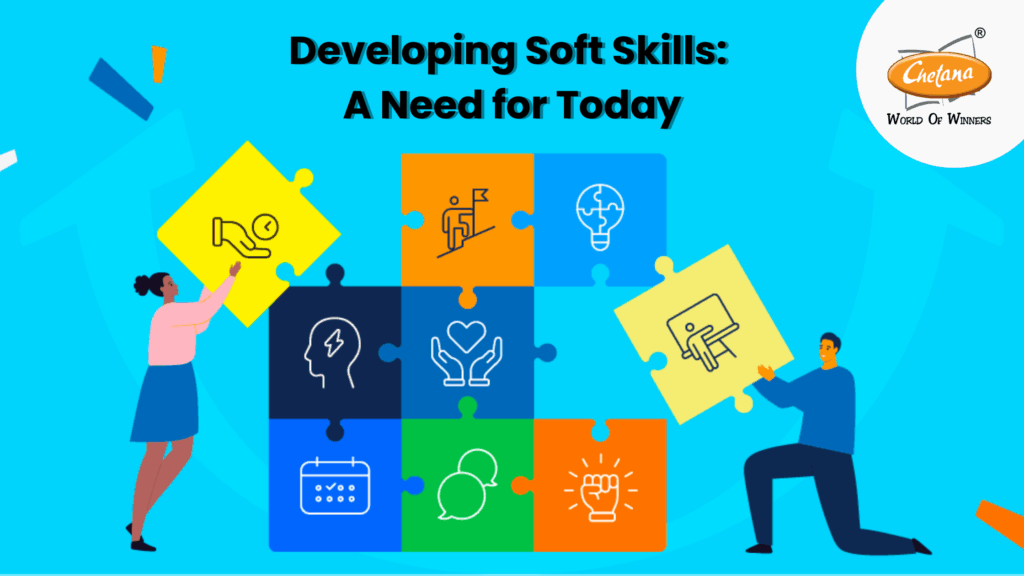
From a musician to an engineer – soft skills are applicable to every profession. And it’s important to develop these at an early age.
An engineer may have a vastly different career trajectory than a musician. They might have varying interests, passions, and even possess different outlooks to life. However, they both approach their work with the same dedicated precision. They both need to:
- Think their way out of a problem,
- Communicate with their colleagues,
- Work within teams, and
- Manage their time.
What are Soft Skills?
They refer to psycho-social skills such as critical thinking, interpersonal communication, teamwork, and time management.
It differs from technical qualifications but are just as important. They are not merely applicable to the workplace, or for employability. These are skills that evolve beyond the resume.
They help an individual navigate their social and professional life. Thus, ensuring flexibility in a rapidly changing world.
The Indian Education System
They are gaining traction today. Despite India’s diverse and growing economy, there is a decline in the acquisition of soft skills in the Indian youth. There are several factors involved – increased digitisation, loss of interpersonal contact, lack of opportunities, etc.
The National Education Policy, 2020, ensures the incorporation of soft skills in the academic curriculum. NEP believes in making the students future ready. It emphasizes on the development of a valuable skill set in the formative years of growth.
Indicating a massive shift from the book-centric approach to a holistic, practical and socially oriented framework. NEP also accounts for the acquisition of these skills across different multilingual and multicultural backgrounds.
Soft Skills in the School
There are multiple ways of providing much needed exposure to students at an institutional level.
They are largely based on application rather than theory. Today, they are being taught in the classrooms through various challenging exercises such as group presentations, role-playing exercises, and extracurriculars.
Extracurricular programs in school involve various clubs and societies. These programs can introduce soft skills like professionalism, teamwork, leadership. Engaging oneself in extracurriculars is always a fruitful and memorable experience.
Team sports are also extremely effective at developing these skills at a young age. It entails a sense of camaraderie and teamwork at an interactive and engaging level.
Age of AI
AI is a rising industry today. It is rapidly revolutionising all sectors. The need to develop soft skills, especially in the age of AI, is quite necessary.
A student may stand out with soft skills. But without, they are replaceable.
Today, information is found in bulk. There is an urgent need to develop critical thinking skills to filter through the data. There is also deficiency of interpersonal contact due to increasing digitisation. Hence, the development of interpersonal skills also stands at a pivotal point. AI is efficient in dealing with administrative tasks and for providing data-driven insights – but it cannot crack a smile at a fellow colleague or build meaningful relationships.
We must develop our soft skills, in par with academic rigour.
After all, the future is for those who adapt.