Blended Learning
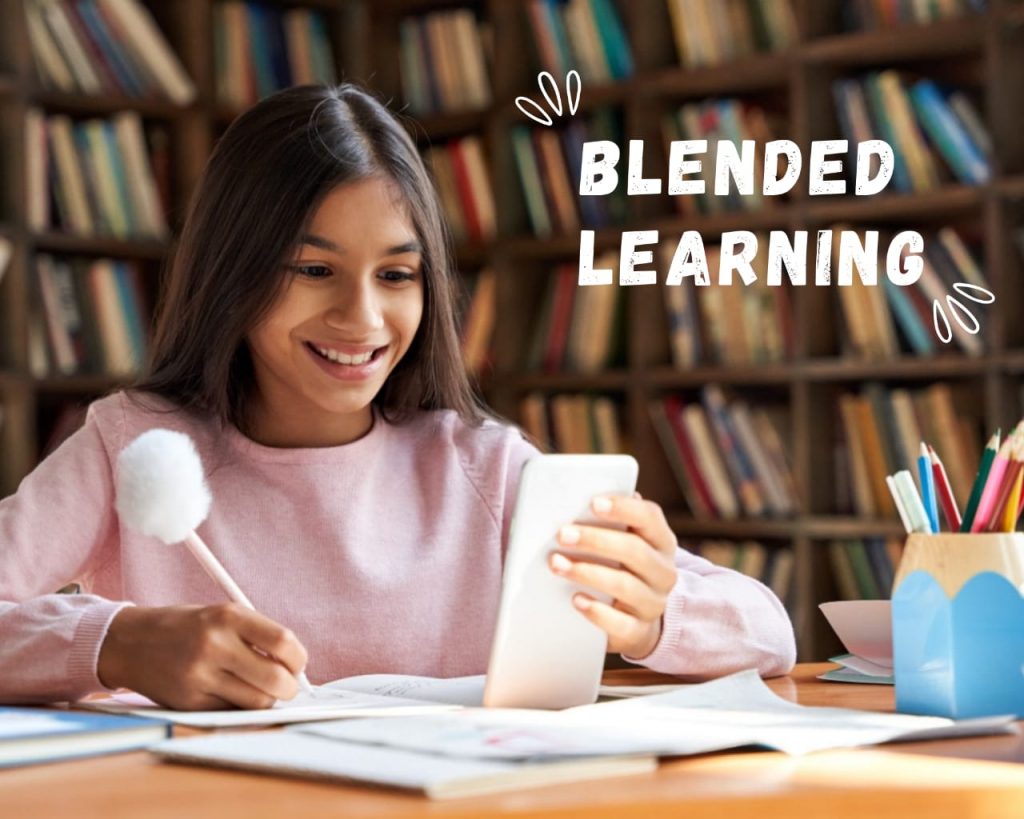
Learning is the constant and time is the variable Though blended learning has been there since the last few decades, the teaching landscape has rapidly evolved globally today, thanks to the changing and challenging times. Initially the shift from the traditional teaching classrooms to digitally reaching out to the students seemed like a challenge to many teachers. The technological rise in the 21st century combined with the internet access across the globe has integrally changed teaching rapidly. Blended learning is a method of learning that combines face-to-face and online instruction. This mixed – mode learning has slowly broken down the conventional walls of teaching; the one size fits all philosophy to tailoring learning experience in which students can participate as self-learners, control the time, pace and place of their learning. While dealing with a diverse group blended learning model makes it possible to personalize the subject matter, learning techniques and personal preferences. It caters to the individual needs of the students learning experience to make learning flexible, easy and self-paced. Academic research suggests that blended learning gives learners a more comprehensive understanding of the course content. Blended learning type of instruction empowers the teacher to work in a more collaborative manner during class time, which allows for a more efficient school day with the intent on greater student learning. This method offers opportunities for learners and teachers both which the traditional brick and mortar classroom may not. With the increasing standards of quality education and busy school schedules, blended learning permits students to learn a portion of the academic content at home and gives teacher the ability to engage students in a deeper, richer and more meaningful context in classroom. This mixed mode instruction method enables the teacher to become more of a participant in student learning and can help facilitate learner, mastery of content with enriching learning activities introduces and completed when class meets face-to-face. The importance of this approach is guided by expertise in handling technological requirements of 21st century skills in order to succeed in live interactions and computer mediated communication. Upgrading and updating oneself with the latest technology will surely be the right step towards blended learning, the future of education. We have to make this shift- Blended learning is here to stay!
Value our Values !!
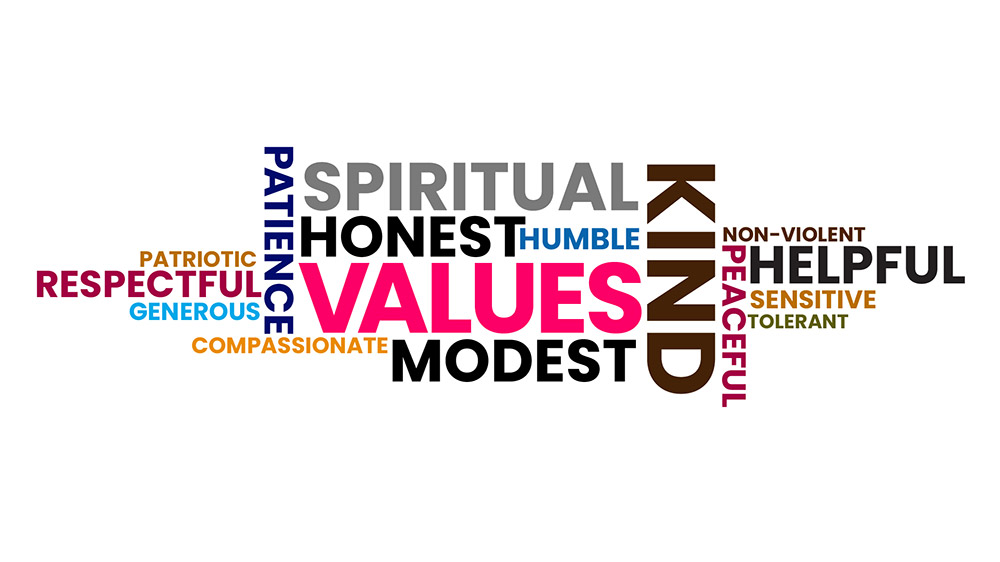
Guide your morals for a better you Schools play a crucial role in preparing young children for life both academically and socially, advocating as moral agents. To grow into responsible and capable citizens, children need exposure to new opportunities and challenging situations. Embrace and Value our Values !! to foster their growth and adaptation. The new education policy focuses on this aspect of enhancing the skills by giving more weightage to life skills and engraving moral values on young minds. Introduction to value education from an earlier age will provide way of thinking and reacting or handling situations wisely with the right kind of attitude. It recognizes this importance and hence value education and life skills form an essential part of curriculum in from the foundational years. What we need today are the values that identify our democratic way of life where in the pursuit of multicultural and environmentally sustainable society which nurtures the core values of care, compassion, freedom, honesty integrity and mutual respect. The greatest challenge for us today as parents and educators in these moving times has been providing a safe and secure learning environment to our curious learners who are evolving constantly. The lives of our children should not only sparkle from outside as they display their behavior and right attitudes but also how they act inwardly when they deal with their mental health. Life series books by Chetana publications sensitizes the children against any kind of discrimination and creates awareness for moral and social responsibilities .These books are well designed and bring in the joy, the challenges, the wonders to strengthen the mind, body and soul of a young learner which are addressed through relevant stories, engaging activities and interesting interactive exercises which are child friendly. As it is rightly said “One has to enjoy giving as much as receiving. The joy of giving others is encapsulated in what is termed as Value education, while the gifts we receive from ourselves are life skills”
Handwriting – Write the right way!
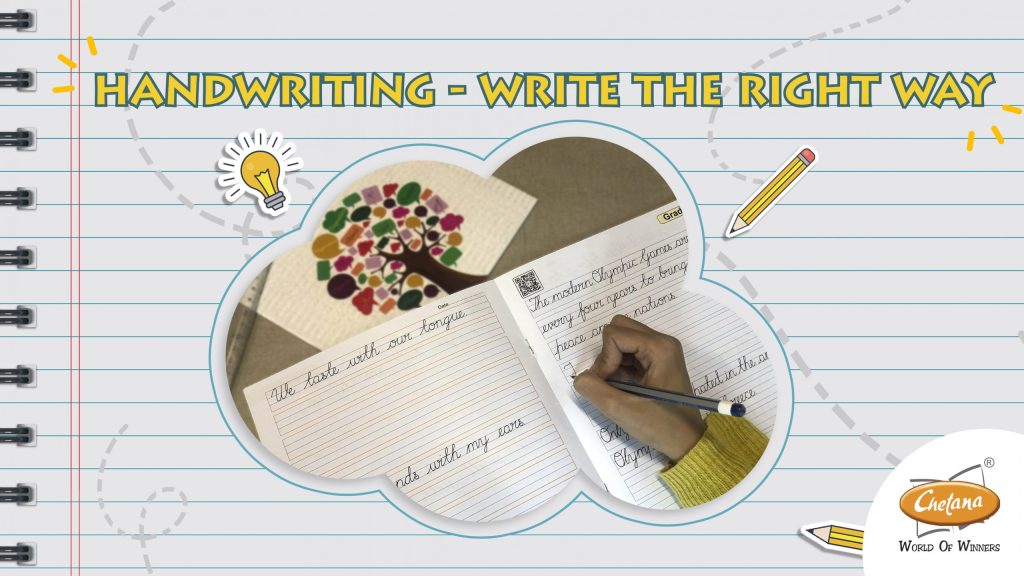
In the present digital age where most of our written communication is done through texting or typing we can see gaps in the writing skills, legibility, neatness and pencil grasp of school goers. Have you wondered tech savvy young children learn to tap, swipe and touch screens before they have even learned to pick up a pencil or tie their shoelaces? Isn’t this a common scene everywhere today? We have to agree with the fact that technology is bound to continue but the demand for writing skills will never diminish as it is one of the basics of foundational learning since early stages. Good handwriting Research says that our brain engages differently when we write as opposed to type .Writing not only improves memory but it helps retain the concepts/thoughts better. This is because it involves complex skills .Good and neat handwriting also contributes to reading fluency as it activates visual perception of letters. Students generally lag behind and miss out on opportunities without fast and legible handwriting. Good handwriting still remains a major form of assessment for many formal qualifications. Cursive handwriting Research says that cursive handwriting primed the brain for learning by synchronizing brain waves which creates a stimuli. “Existing literature suggests that such stimulus in the brain is important for memory and for the encoding of new information and, therefore, provides the brain with optimal conditions for learning. The latest research on the brain benefits of cursive handwriting adds to a growing body of evidence and neuroscience based research on the importance of learning to write by hand. Incorrect pencil grasping leads to deficit letter formation, inconsistent sizing of letters maintaining the line limits and word mirroring which lead to frail and feeble handwriting. There is no substitute for practice whether it is formal writing or informal. It’s never too late to start. Invest in the right tools To begin invest in the right kinds of tools. For the beginners and young children triangular pencils work the best. A firm, controlled grip on the pencil, a loose wrist, your elbow as an anchor point, relaxed shoulders consistent, a interesting and engaging content to write and methodic practice with Chetana publications handwriting writing books and lots of positive encouragement is the mantra for a good handwriting.